
Concrete Wall Chasing
For installation channels in concrete walls where aggregate, possible reinforcement, groove dimensions and machine load must be confirmed together.
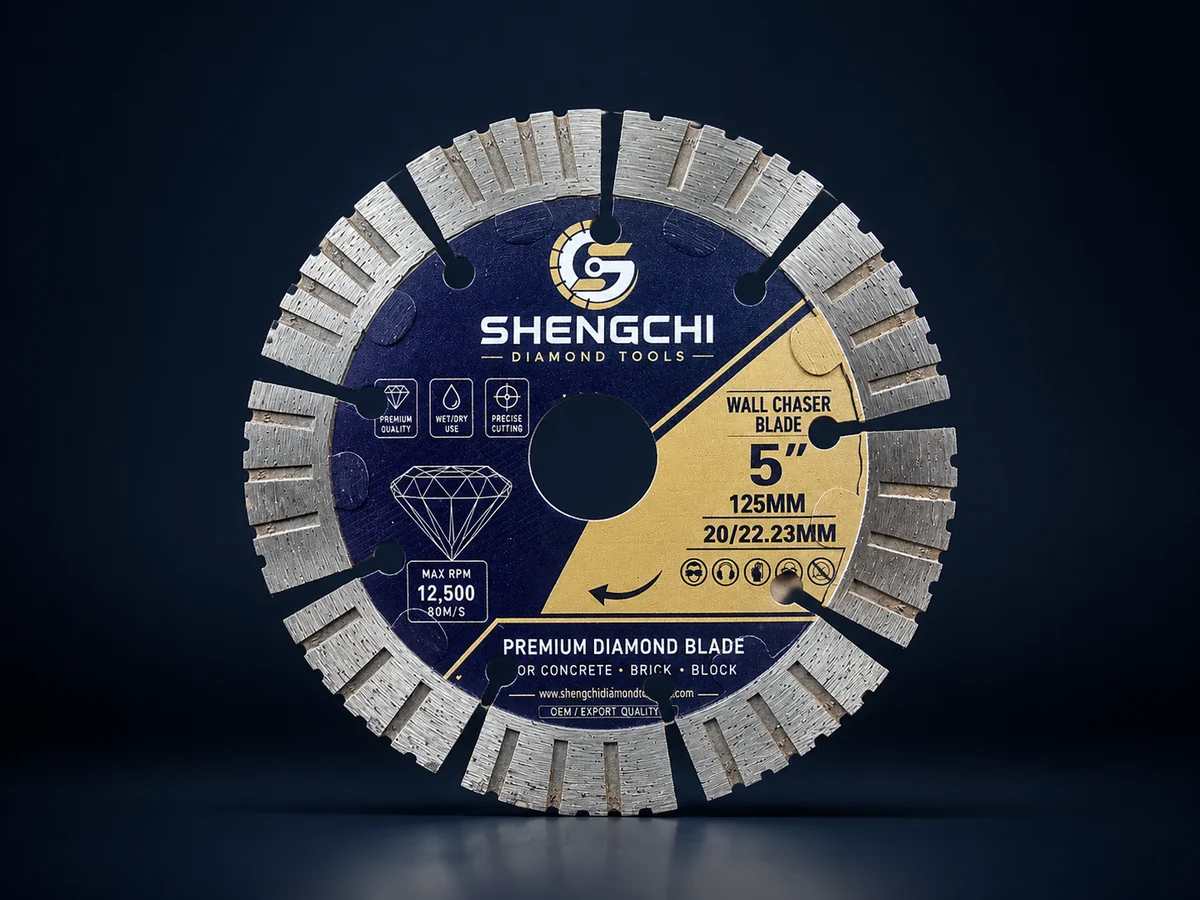
The SHENGCHI 125mm wall grooving blade is designed for slotting concrete, brick, block and masonry walls with compatible wall chasers or cutting machines. Blade structure, bore, thickness and operating mode are confirmed against the machine, groove requirement and working material before quotation.
Use these fields to confirm whether the blade direction matches the machine and wall before quotation.
Wall material and machine configuration change the correct segment and operating direction.
For installation channels in concrete walls where aggregate, possible reinforcement, groove dimensions and machine load must be confirmed together.
For brick, block and common masonry where debris removal, abrasive wear and stable tracking influence the final segment direction.
For electrical, plumbing and renovation slotting where the required groove width, depth and blade arrangement must match the wall chaser.
Final performance depends on material hardness, aggregate, reinforcement, machine power, cutting depth, blade arrangement and operator working method.
Diameter alone is not enough. The same 125mm size can require a different structure when the wall material, machine or groove arrangement changes.
Commercial details are confirmed with the exact model and order. No fixed quantity or delivery promise is shown unless it has been verified.
The 125mm size identifies the blade class, but the final wall-grooving specification depends on the wall material, machine, groove geometry and blade arrangement. Concrete, brick, block and masonry can require different segment and bond directions.
Confirm the wall-chaser or cutting-machine model, available power, rated speed, spindle or arbor, flange condition and whether the machine uses one blade, a paired-blade set or a stacked arrangement.
Send the target groove width and depth. Groove width can depend on blade thickness, blade count, spacer dimensions and the machine configuration rather than blade diameter alone.
Dry or wet use, dust extraction, reinforcement and material hardness affect heat, debris removal and segment wear. The final construction is therefore confirmed from the actual application rather than from appearance alone.
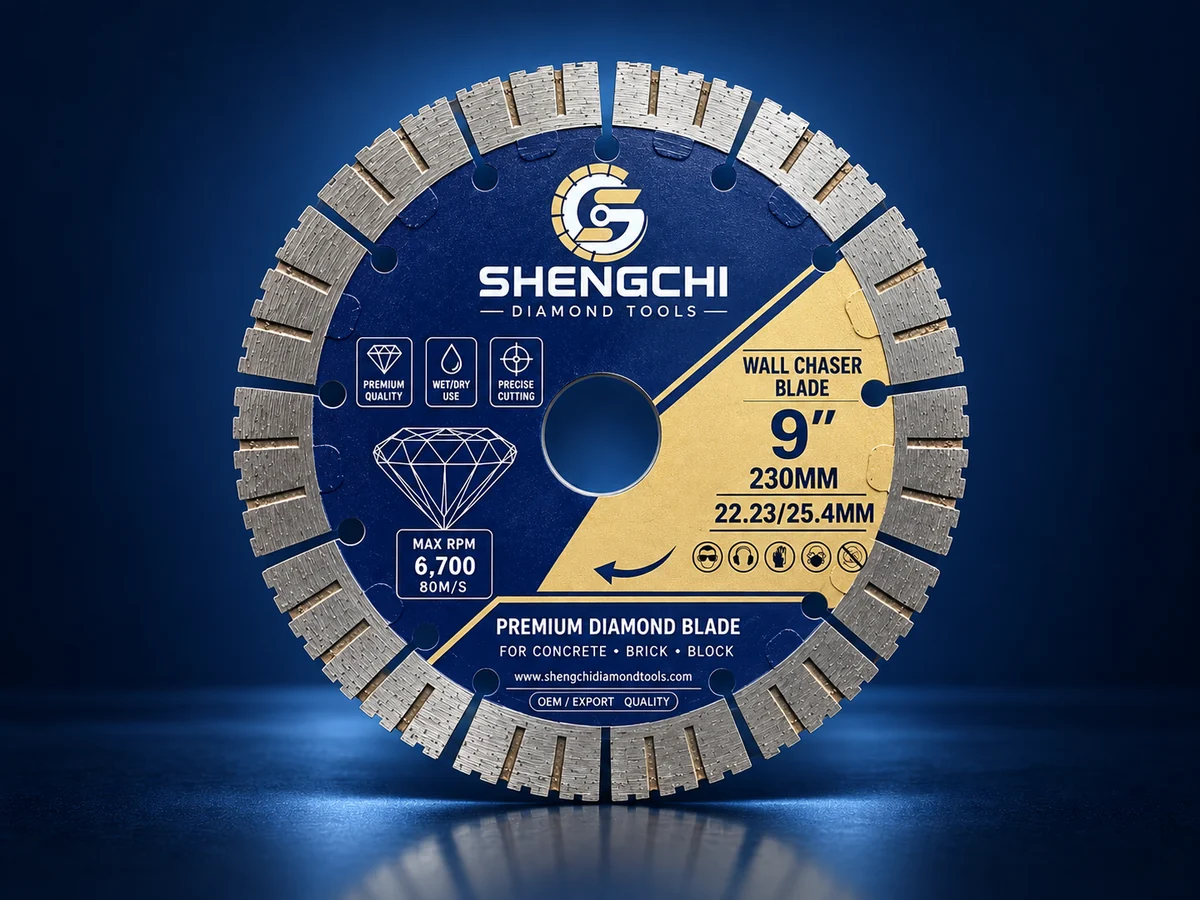
Real SHENGCHI 230mm wall-grooving sample for larger slotting applications. Bore and blade arrangement should be confirmed against the machine before order approval.
Segmented wall-grooving blade direction for brick, masonry and concrete where debris removal and stable slotting are priorities.
Protection-Tooth Wall Grooving Blade for Concrete, brick and masonry. Matched to Wall chaser, angle grinder. Operating mode: Dry / Wet. Diameter, bore and final construction are confirmed against the actual machine and order requirement.
Use the RFQ attachment field when a current blade, drawing, packaging reference or failed sample photo can clarify the requirement.
This product direction is intended for concrete, brick, block and masonry wall-slotting work. Final segment structure and bond still depend on material hardness, aggregate, reinforcement, machine load and the required groove.
Use it only with a compatible wall chaser or cutting machine after confirming the machine type, power, rated speed, guard clearance, spindle or arbor, flange condition and blade arrangement.
Dry or wet operation is confirmed from the blade construction, machine instructions and job-site condition. Do not assume one operating mode for every wall-chasing machine.
Send the number of blades, blade thickness, spacer or flange arrangement and the target groove width. Single, paired or stacked blade systems can require different combinations.
Yes. Approved product marking, UV artwork, label language, individual packaging, inner boxes and carton marks can be reviewed after the technical specification is confirmed.
Send the wall material, machine model, blade diameter, bore size, required groove width and depth, dry or wet requirement, quantity and any OEM or packaging requirement.
These links separate product, application, guide, case, OEM and quality intent instead of repeating the same content on one page.
Include the material, machine, diameter, bore, dry or wet use, quantity, quality target and packaging requirement.