
FUNCTION-LED PRODUCT SELECTION
Segmented Wall Grooving Blade
Segmented wall-grooving blade direction for brick, masonry and concrete where debris removal and stable slotting are priorities.
OEM MARKING POSITIONYour Brand HereUV printing or other approved marking method · artwork confirmed before production
PROCUREMENT SNAPSHOT
Commercial details are confirmed with the exact model and order. No fixed quantity or delivery promise is shown unless it has been verified.
Application, structure and working-condition notes
Application
Segmented wall-grooving blades are selected for slotting work where material discharge, machine power and slot dimensions must be considered together.
Selection points
- Brick, block, masonry or concrete
- Machine model, power and RPM
- Required slot width and depth
- Blade spacing and flange condition
- Dust extraction and dry/wet mode
Order confirmation
Final core, segment geometry, dimensions and acceptance criteria are confirmed for the specific application and order.
SELECTION ORDER
Do not select from the rim name alone.
Confirm the functional task first, then the structure, and finally the detailed specification.
Function & Material
What needs to be cut, slotted, carved or processed?
Rim & Structure
Continuous Rim, Turbo Rim, Segmented Rim, Protective Segments, Vacuum Brazed or Special Profile.
Machine & Specification
Power, diameter, bore, dry/wet mode, feed and quality target.
RELATED PRODUCTS
All products →Other products in this function family.
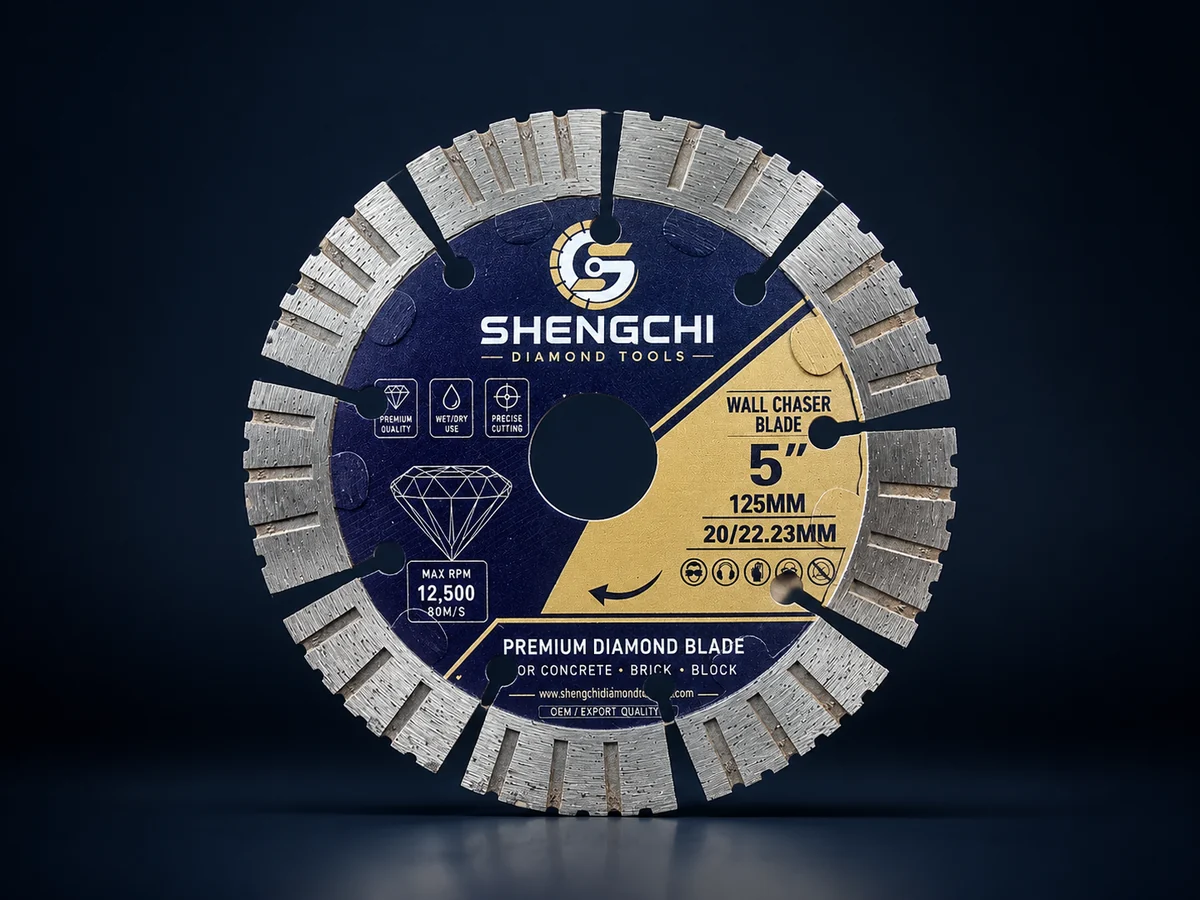
Wall Grooving BladesSegmented Rim
125mm Wall Grooving Blade
Real SHENGCHI 125mm wall-grooving sample for concrete, brick, block and masonry applications. Final construction is confirmed from the machine and groove requirement.
Concrete, brick, block and masonry
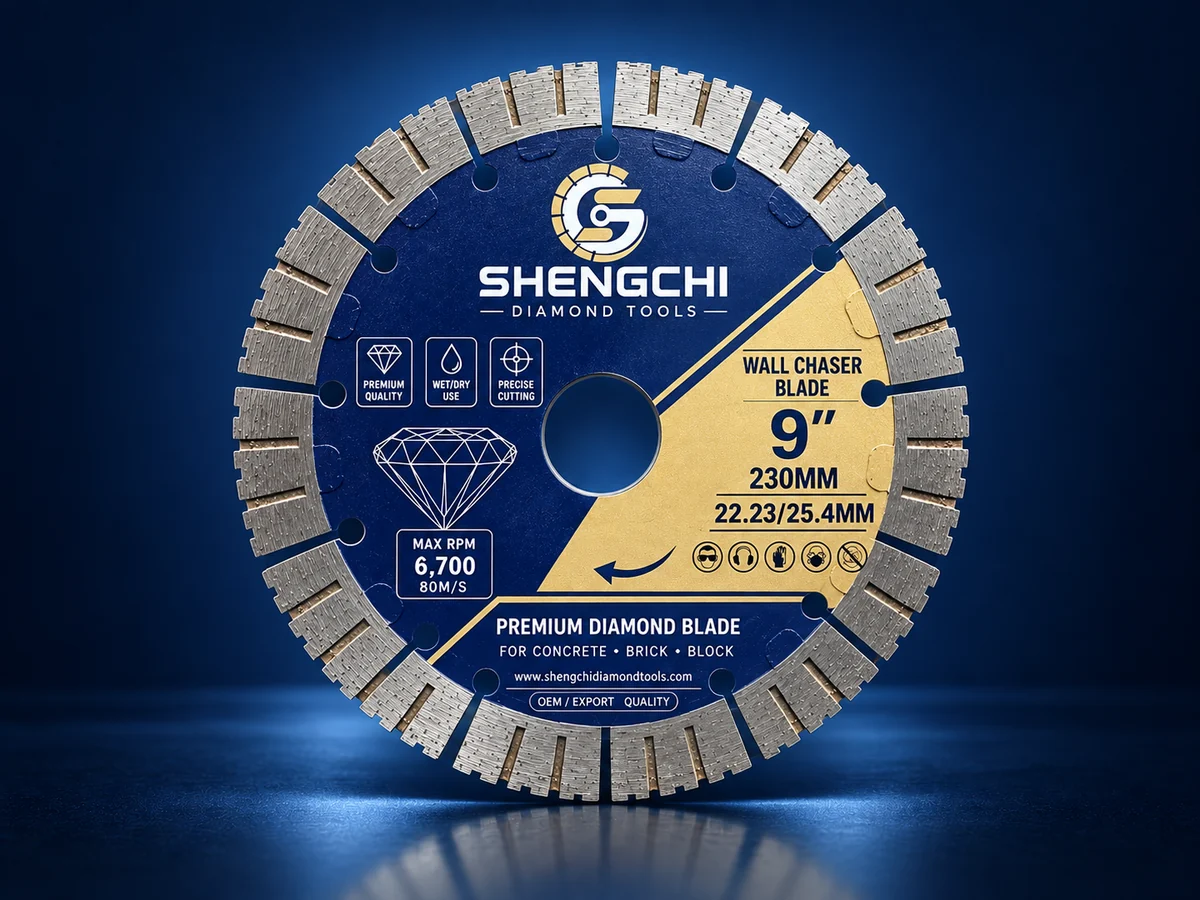
Wall Grooving BladesSegmented Rim
230mm Wall Grooving Blade
Real SHENGCHI 230mm wall-grooving sample for larger slotting applications. Bore and blade arrangement should be confirmed against the machine before order approval.
Concrete, brick, block and masonry
Wall Grooving BladesProtective Segments
Protection-Tooth Wall Grooving Blade
A function-led SHENGCHI blade series. Final structure, bond and dimensions are confirmed from the material, machine and target performance.
Concrete, brick and masonry
BUYER FAQ
Questions that help us quote this product accurately.
Use the RFQ attachment field when a current blade, drawing, packaging reference or failed sample photo can clarify the requirement.
What information should I send for a quotation?
Send the material, machine, diameter, bore, dry or wet use, quantity, target performance and any OEM or packaging requirement.
Can I send a current blade photo or drawing?
Yes. Upload a JPG, PNG, WebP or PDF with the RFQ, or attach the reference directly in WhatsApp after opening the product inquiry.
Can the size, bore or product marking be customized?
Custom size, bore, UV marking and private-label options are reviewed against the actual product structure, quantity and approved order specification.
READY FOR A FOCUSED QUOTATION
Send six details and we can narrow the blade faster.
You do not need to know the internal bond formula. Start with the application, machine and commercial requirement.
1. Material to cut2. Machine / power3. Diameter & bore4. Dry / wet method5. Quantity / sample stage6. OEM / packaging need
PRODUCT RFQ
Send the exact working condition.
Include the material, machine, diameter, bore, dry or wet use, quantity, quality target and packaging requirement.